
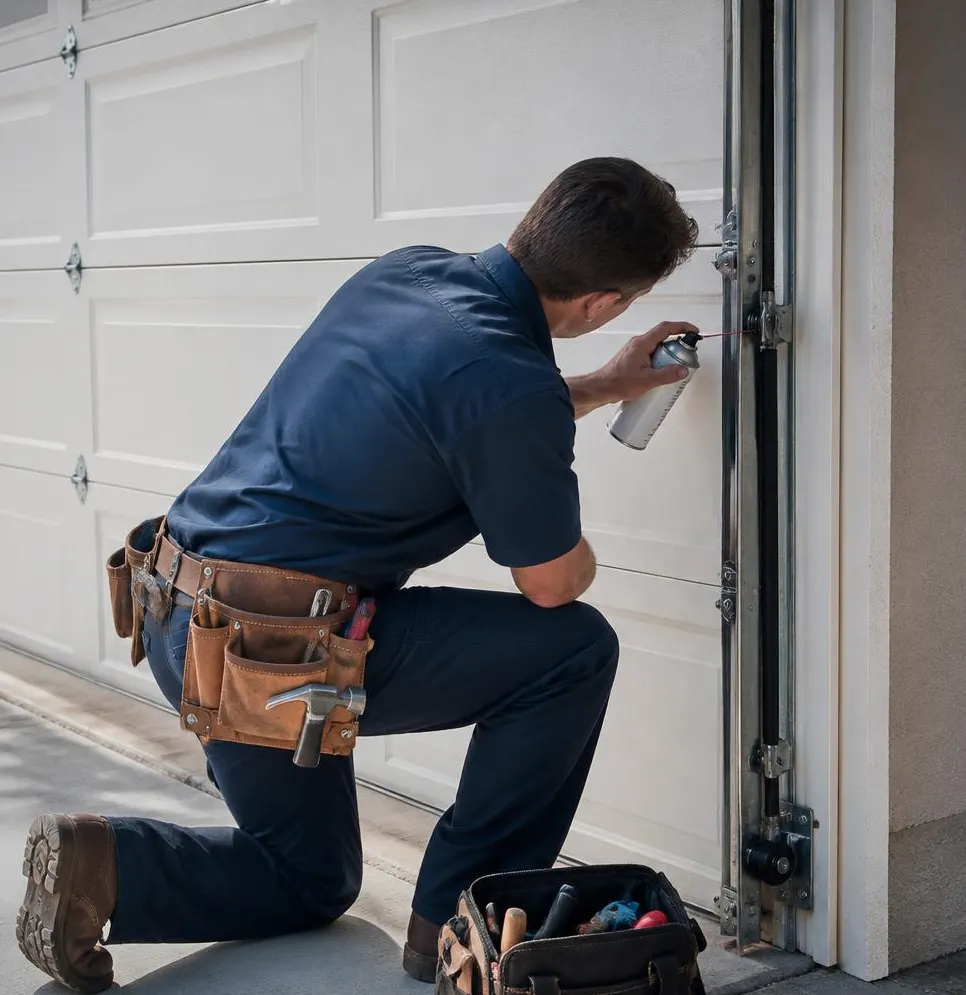
A garage door that's loose on its tracks, running on worn rollers, or sagging on tired springs can fail in a wind event well before any other part of the house does. The fix is not complicated: tighten the track hardware, check the spring balance, add reinforcement if the door is older or oversized, and make sure the opener has a manual release you can actually find in the dark. Do that before the wind picks up, not after a panel is already bent.
Why the Garage Door Is the Weakest Wall in the House
Every other exterior wall on a typical home is a solid, continuous structure tied into the framing. The garage door is the opposite: a large panel of thin steel or aluminum, hung on rollers, held in tracks by a handful of bolts, and balanced by springs that are doing most of the structural work. It's also usually the single biggest opening in the home's exterior.
When wind hits a house, pressure builds on the windward side and pulls on the leeward side. A garage door has to resist both without the stiffening that a stud wall gets from drywall, sheathing, and continuous framing. If the door buckles inward or blows out, the sudden pressure change inside the garage can stress the roof structure and walls from the inside, which is why wind-rated doors and bracing exist in the first place.
Age and Build Quality Matter
Lightweight doors, especially single-layer steel without a reinforced back, flex more under wind load. So do older doors where the horizontal struts (if any were ever installed) have loosened or rusted. If your door was installed decades ago and has no visible internal bracing, it was likely built to a lower wind-load standard than doors sold today.
What Santa Ana Winds and Fall Storms Do to Garage Doors
Inland Valley communities get gusty offshore winds in the fall, often with dust and dry debris riding along with them, followed by the first real rain of the season. That combination creates two separate problems for a garage door:
- Wind pressure and debris impact — gusts load the panel directly, and airborne branches, trash cans, or patio furniture can dent or puncture thin steel sections.
- Wind-driven rain intrusion — once the rain starts, wind pushes water sideways under the bottom seal and around the side weatherstripping, especially if the seals are cracked or compressed from age.
Doors with worn bottom seals or gaps along the side tracks will let water in even during a moderate storm, and that water tends to pool right where the torsion spring and bottom brackets live, encouraging rust.
Pre-Storm Checklist
- Check the track bolts and brackets. Walk the full height of both tracks and tighten any bolts that have backed out. Loose brackets let the door rack side to side in wind, which accelerates roller wear and can pop the door off the track entirely.
- Inspect the rollers. Cracked nylon rollers or pitted steel rollers bind under load and put uneven stress on the track. Replacing a full set is inexpensive compared to a bent track.
- Test the spring balance. Disconnect the opener and lift the door halfway by hand. It should stay in place on its own. If it drifts up or crashes down, the springs are no longer carrying their share of the load, which means the door relies more on the opener and the track hardware during a wind event, exactly when you don't want that.
- Look at the weatherstripping. Bottom seals that are flattened, torn, or pulling away from the retainer should be replaced before the rain starts, not after you've already got water on the garage floor.
- Add or inspect horizontal struts. If your door doesn't have reinforcement struts across the back of the panels, this is worth asking about, particularly on wider double doors, which flex more under wind load than single doors.
- Know your manual release. If the power goes out mid-storm, you need to be able to disconnect the opener and operate the door by hand without fumbling for instructions. Locate the release cord now and make sure it reaches.
- Clear the tracks of dust and debris. The dry season leaves grit in the tracks that turns gritty and abrasive once it mixes with the first rain, wearing down rollers faster than normal.
Signs Your Door Won't Hold Up to the Next Windstorm
- The door shudders or rattles audibly when gusts hit it, even with the opener engaged.
- You can see daylight around the edges when the door is closed.
- One or more panels show visible bowing, especially near the center.
- The door has been repainted or patched over rust along the bottom panel or track brackets.
- The opener struggles or reverses on its own during windy conditions, which usually means it's fighting an unbalanced door rather than a faulty sensor.
Any one of these on its own isn't an emergency, but together they describe a door that's more likely to fail at the worst possible time.
When to Call La Verne Garage Door
If your door is out of balance, the rollers are shot, or you're not sure the hardware will hold up through a windy night, that's a maintenance visit worth scheduling before the season turns, not after. La Verne Garage Door handles full garage door maintenance checks covering tracks, rollers, hinges, and seals, and performs spring replacement when a door is no longer holding its balance safely. If a storm has already caused damage, or your door won't open at all with the power out, our emergency garage door service covers that too, day or night.
If you're in La Verne, San Dimas, Pomona, Claremont, Glendora, Covina, West Covina, or Azusa and want your garage door checked before the next windstorm rolls through, call La Verne Garage Door today to schedule a pre-season inspection.